

When it comes to building or fixing a home’s drainage, waste, and vent (DWV) system, choosing the right pipe material makes all the difference. A reliable DWV setup keeps water flowing smoothly and prevents unpleasant problems later on. That’s why many homeowners find themselves comparing ABS vs PVC pipe fittings. These two materials are the most common options for plumbing projects, and each one offers its own strengths.
In this guide, we will break down what sets ABS and PVC apart and help you understand which one is the better choice for your next installation or repair.

When comparing ABS vs PVC, it helps to know what each material is made of, how it’s used, and how to spot it quickly.
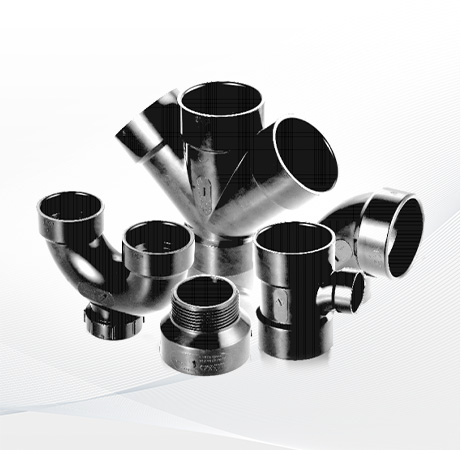
ABS (Acrylonitrile Butadiene Styrene) is a strong, lightweight plastic known for its durability. It’s commonly used in DWV systems and is easy to recognize by its solid black color. ABS fittings are popular for projects that need toughness and reliable performance in colder temperatures.
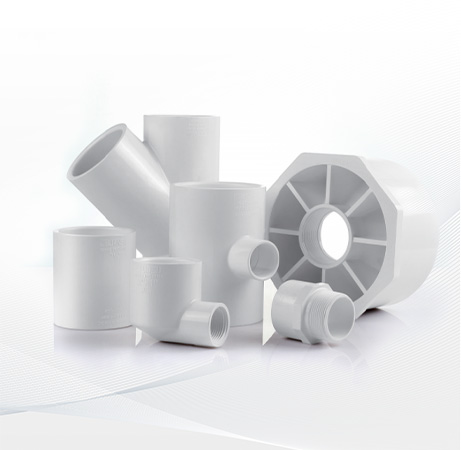
PVC (Polyvinyl Chloride) is a versatile plastic widely used in plumbing, irrigation and drainage. It usually comes in bright white, making it easy to identify. PVC pipe fittings are favored for their flexibility, chemical resistance, and long-term dependability in many home and outdoor applications.
The table below gives a quick, clear snapshot of how ABS vs PVC compare, helping you choose the right material for your next project.
Feature | ABS Fittings | PVC Fittings |
Durability & Strength | Very strong, impact-resistant, holds up well in colder environments. | Durable but slightly less impact-resistant than ABS; great for everyday plumbing. |
Installation | Fast installation—no curing time; uses a single-step solvent cement. | Requires primer + cement, so installation takes a bit longer. |
Temperature Tolerance | Handles cold temperatures better; stable in freezing conditions. | Performs well in moderate temperatures; can soften under extreme heat. |
Sunlight Resistance | Not UV-resistant unless treated; prolonged sun exposure can weaken it. | Better UV resistance, especially when painted or protected. |
Sound Dampening | Noisy—water flow tends to be louder through ABS. | Quieter operation; better at reducing water-flow noise. |
Cost | Usually slightly more expensive. | Generally cheaper and more widely available. |
Environment | Contains more chemicals; it is less environmentally friendly. | Produces fewer emissions during manufacturing, making it a more eco-friendly option. |
When deciding between ABS vs PVC, think about where the pipes will be installed and what your local rules allow.
Choosing the right material often depends on the environment and project demands.
§ Use ABS for: Underground sewage lines, exterior plumbing that must be buried, and systems exposed to extremely cold climates. ABS fittings are tough, handle impact well, and stay stable in freezing temperatures.
§ Use PVC for: Indoor DWV runs, especially where quieter water flow is important. PVC fittings pipe is flexible, making it easier to maneuver through tight indoor spaces. PVC pipe fittings and PVC fittings for plumbing are also ideal in areas where building codes limit or restrict ABS installation.
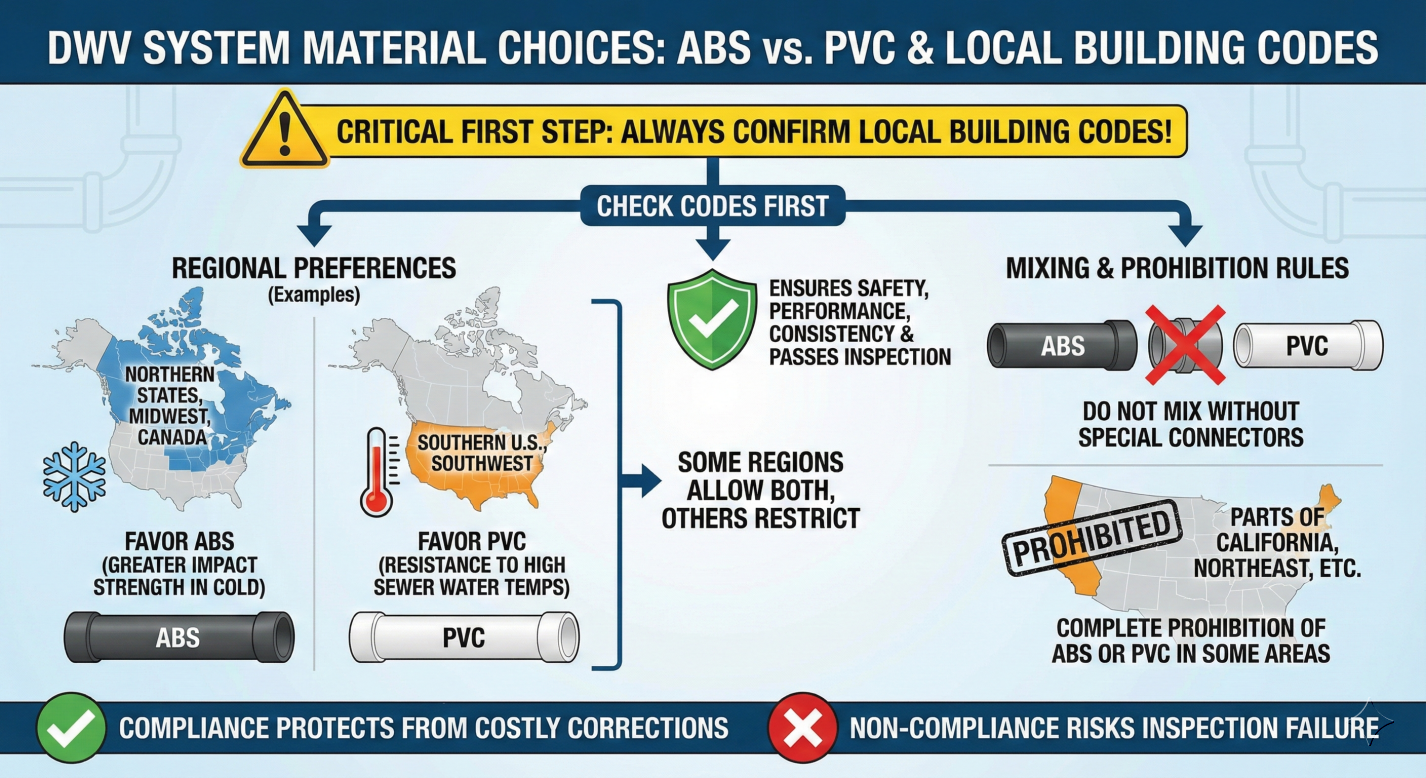
Before choosing between ABS and PVC, always confirm what your local building codes require. Some regions allow both materials, while others only permit PVC for certain parts of the DWV system. For example, many parts of the Southern United States and the Southwest often favor PVC due to its resistance to high sewer water temperatures, while ABS remains very common in Northern states, the Midwest, and Canada for its greater impact strength in cold weather. In many areas, ABS can't be mixed with PVC without special connectors and some locations, such as parts of California and certain municipalities in the Northeast, completely prohibit ABS in favor of PVC, or vice versa. These rules exist to ensure safety, performance, and consistency in plumbing systems. Taking time to check the codes protects you from costly corrections and ensures your installation passes inspection the first time.
Yes, but not directly. Since ABS vs PVC react differently, you need a special transition coupling approved by local codes. Most areas do not allow mixing them with regular cement.
PVC is generally considered safe for carrying drink water, while ABS is not approved for this purpose. ABS works best in DWV applications where the water isn't meant to be consumed.
ABS is solid black, while PVC is usually bright white. This color difference makes identification easy at a glance.
Between ABS vs PVC, PVC is generally considered more environmentally friendly because it produces fewer emissions during manufacturing.
Both can be used underground, but ABS is often preferred for sewage lines due to its impact strength. PVC is also safe underground when properly buried and supported.
Choosing the right material in the ABS vs. PVC debate is critical for DWV, plumbing, and underground systems. LESSO America simplifies this choice by offering a full range of high-quality plastic pipe and fittings, including ABS DWV and various PVC options (SCH 40, DWV, SDR 35). We ensure durability, safety, and reliable performance through strict industry certifications and advanced molding technology.
Make your project stress-free—Explore the LESSO America catalog today to find the perfect ABS or PVC fittings for your needs!

Tel
(951) 547-6888
Fax
(951) 547-6886
Address
1010 Railroad Street, Corona, CA 92882
Copyright © 2026 CHINA LESSO.ICP No.1302348 Cookie-Policy


TOP


